
WELCOME
TO YOUR NEXT ADVENTURE
Intuitive / Psychic Development Workshops
Confidential Hypnosis Sessions & Groups
Past Life Regression
All services via Zoom or In-person (office setting only) in the Hudson Valley, NY
Saturday, May 16, 2026
In Memory. Jean Houston— A Light Beyond Measure
There are people who enter your life and rearrange everything, not with force, but with such luminous clarity that you cannot imagine having lived before you knew them. Jean Houston was one of those people. She is simply irreplaceable.
I first found my way to her through a nudge from my dear friend Dick Sutphen, who told me, with his characteristic wisdom and wit, that if he'd had a child with Jean Houston, it would be me. I didn't know who she was at the time. So I drove from Malibu to Rancho Mirage on a weekend out of pure curiosity, and I have never been the same since.
She sat with me. She talked with me. She saw something in me that I had not yet learned to see in myself. By the end of that three-day seminar, she convinced me to write my first book, Always Face the Hounds, not because the world demanded it, or maybe it did, but because the record mattered. Needless to say, that one got me into a little bit of trouble, but that book led to another, and another, and another. Metaphysical New York and Metaphysical Ireland would simply never have been created without the spark Jean placed in my hands that weekend in the desert, and the insistence of her and our mutual friends.
Jean Houston was one of the most brilliant, most expansive, most joyful human beings to have walked this earth in centuries. The breadth of her mind was staggering: philosopher, scholar, mythologist, consciousness pioneer, social artist, storyteller, and tireless champion of the possible even when things seem impossible. She counseled presidents and heads of state. She trained leaders on every continent. She co-founded the Human Potential Movement and authored more than two dozen books that have changed the way humanity understands itself. The great Margaret Mead called her her adopted daughter. And yet, Jean’s miracle was that she made every single person she encountered feel like the most important soul in the room.
She mentored me the way great teachers mentor, not by telling you who to be, but by reflecting back who you already were, and then daring you to become more. When I was in Ireland, living on the ancient sacred land amongst the ancient stones I love so deeply, she taught seminars online with Peggy Rubin and I was so grateful to be there, learning still. She gave me guidance and focus when I needed it most. She inspired my audio programs. She shaped the intuitive development workshops I now offer to others. A living thread of her teaching, woven into everything I do.
And she was fun with her spectacular sense of humor. A laugh that could fill any room. She could move effortlessly from the most profound metaphysical discourse to a song — and once, for me, she sang Mary Ann Malone! I will hold that moment for the rest of my life.
Jean Houston taught me that the examined life is not a burden; it is an adventure. That consciousness is not a ceiling but a horizon. That each of us carries within us the seeds of something mythic, something vast, something the world is waiting for. She lived this truth completely and without apology, and in doing so, she gave the rest of us permission to do the same.
She has been like a mother to me and many others — wise and warm, challenging and tender, endlessly generous with her time and her insight. The world she helped create is larger, kinder, and far more awake because of her.
There is no one like Jean Houston on this earth. There never has been. And the light she has poured into so many lives — including mine — will continue to shine long after we are all gone, in the books we have all written, the students we have all taught based on her teachings, and the courage she gave all of us to face the hounds and keep going.
I love you, Jean. Thank you for seeing me.
Meg's Blog - May 11, 2026
This is a blog I wrote several months ago, and I am just publishing it now. It can be reprinted for free with permission. Please feel free to email me at meg@metaphysicalnewyork.com.
Sky, Sound & Stones
Archaeoastronomy and Archaeoacoustics at the New York Stone Chambers in a Global Megalithic Context
By Meghan Hansen
Intuitive Researcher and Founder of Metaphysical New York & Metaphysical Ireland. Author of Psychic Archaeology in New York: The Timeless Resonance of the New York Stone Chambers and Psychic Archaeology in Ireland: Unravel Ancient Mysteries and Propel Your Life Forward
The Forgotten Observatories of the Hudson Valley
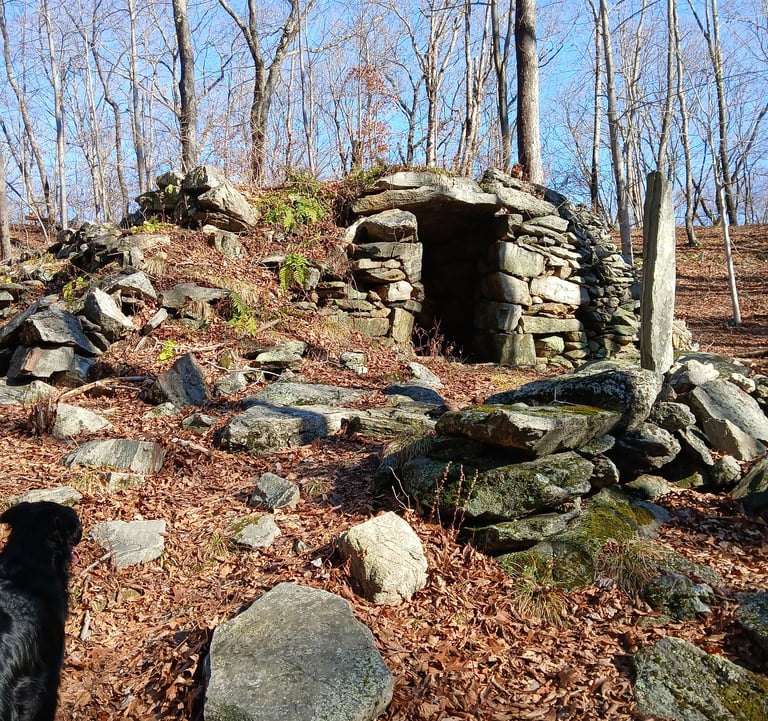
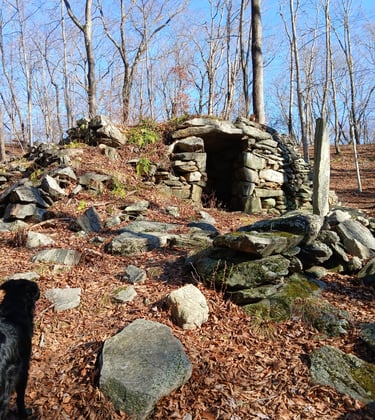
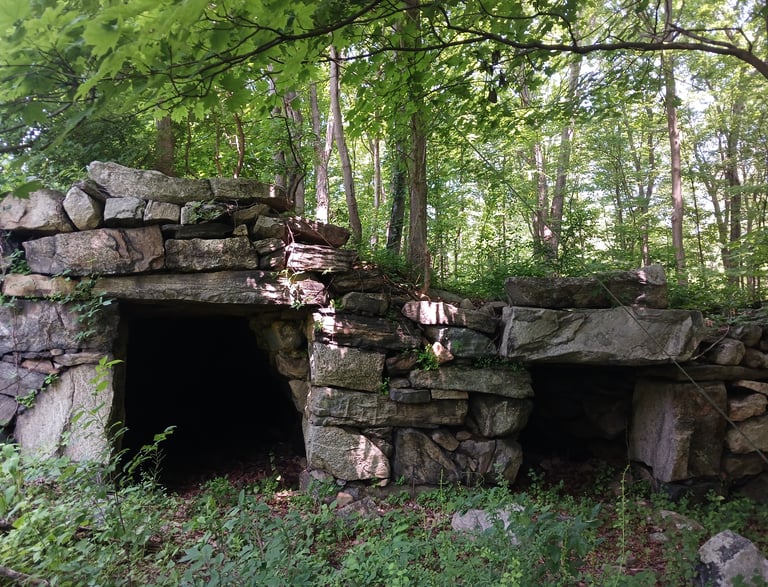
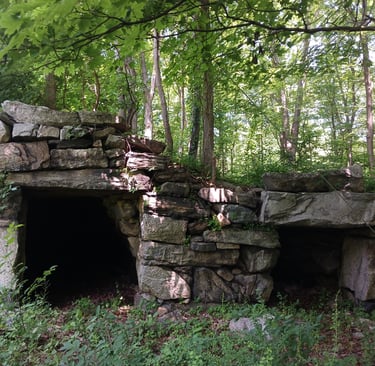
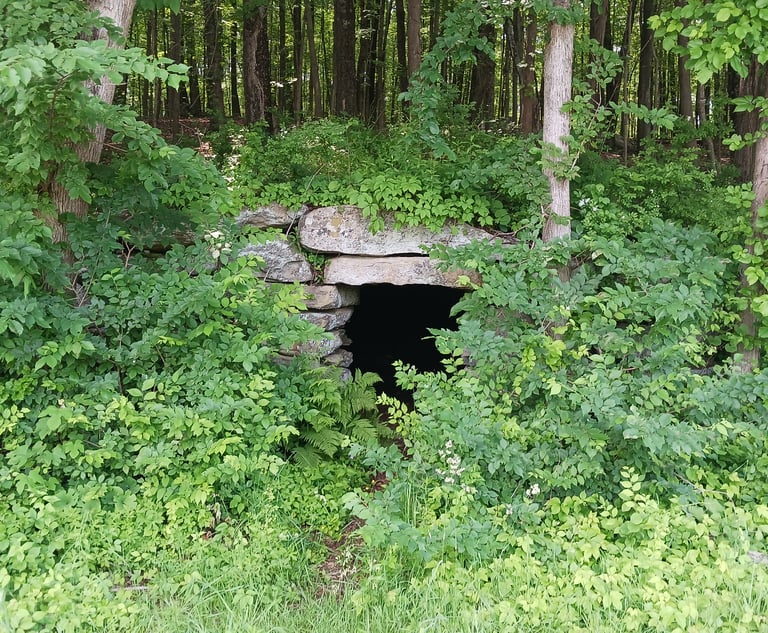
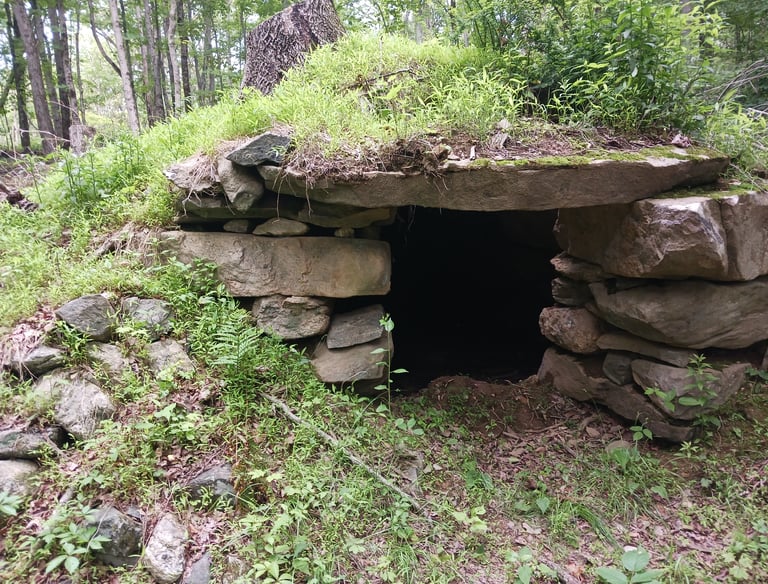
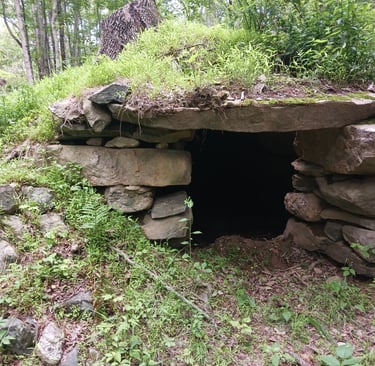
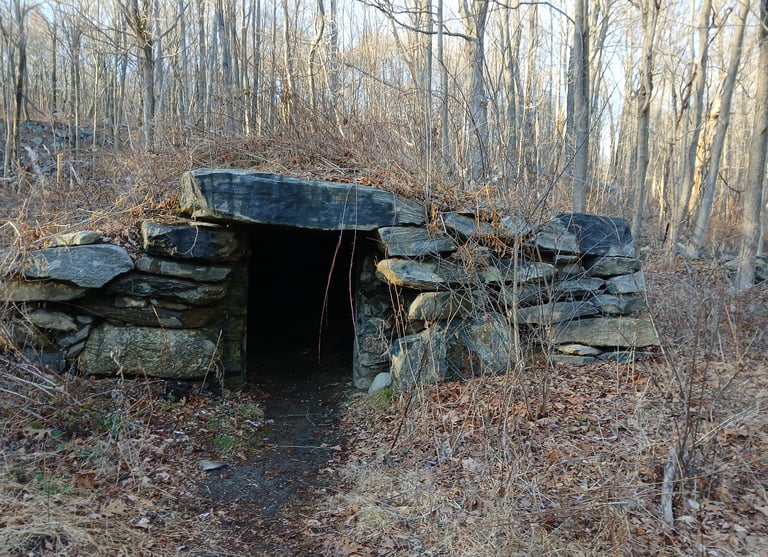
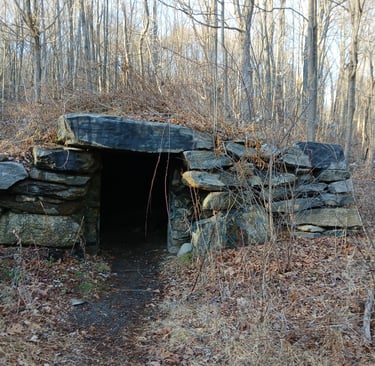
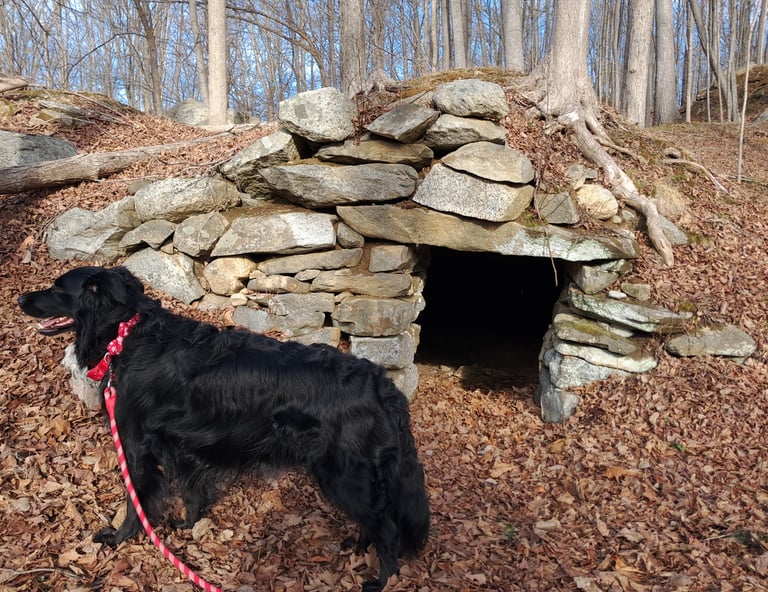
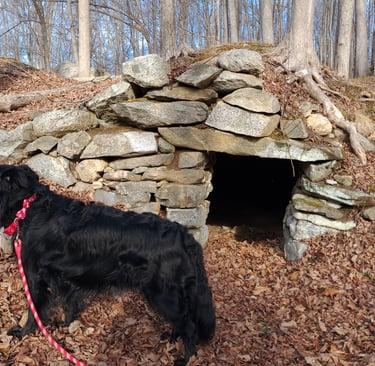
Amidst the hills and trees of Putnam County, Westchester County, Dutchess County, and the surrounding regions of New York and New England, the stone chambers have long resisted easy classification. Built of dry-laid fieldstone with corbelled roofs and massive capstones, their construction echoes, in miniature, the megalithic tradition that stretches from the passage mounds of Ireland's Boyne Valley to the dolmens of France, the portal tombs of Wales, and the hypogeum of Malta.
For too long dismissed as colonial root cellars or Revolutionary War-era storage structures, these chambers are now attracting the serious attention of researchers in two rapidly growing interdisciplinary fields: archaeoastronomy, the study of astronomical alignments encoded in ancient structures and archaeoacoustics, the investigation of deliberate sonic properties in prehistoric spaces.
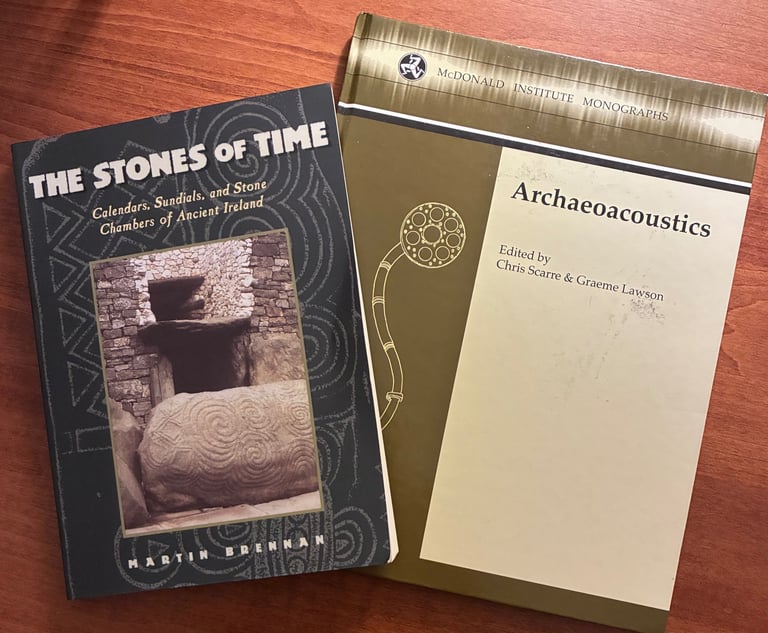
The questions being asked are ancient ones: Did the builders of the New York chambers orient structures toward the rising sun at the winter solstice, as builders did at Newgrange five thousand years ago? Did the resonant interiors of these corbelled chambers amplify the human voice, induce altered states of consciousness, and serve as spaces for ceremony and spiritual communion with the sky? And perhaps most urgently: what methodologies can researchers apply today to begin to answer these questions systematically? This article draws heavily upon the foundational archaeoastronomical scholarship of Martin Brennan, and the multi-disciplinary volume Archaeoacoustics edited by Chris Scarre and Graeme Lawson, and current simple fieldwork practices to illuminate the remarkable convergences between the New York chambers and their megalithic counterparts around the world.
Martin Brennan and Megalithic Astronomy
To understand what the New York stone chambers may have recorded in their orientations and art, one must first understand the foundational framework laid by researcher and artist Martin Brennan. Born to Irish parents in Brooklyn, New York, and trained at Pratt Institute where he majored in visual communication, Brennan spent years in Mexico studying prehistoric rock inscriptions before a Japanese Celtic scholar encouraged him to return to the land of his ancestors. He settled in Ireland in 1970 and devoted the following decade to an intensive investigation of the passage mounds of the Boyne Valley and Loughcrew Hills and beyond — an endeavor that would permanently reshape the field of prehistoric astronomy.
Brennan's first major work, The Boyne Valley Vision, published by the Dolmen Press in 1980, presented a radical challenge to prevailing archaeological opinion. The great mounds of Newgrange, Knowth, Dowth, and the Loughcrew cairns had long been described as tombs of the Neolithic dead, their elaborate stone carvings interpreted as purely ritual or abstract decoration. Brennan demonstrated otherwise. Through painstaking field observation alongside his partner Jack Roberts and the informal research collective they called Stonelight, Brennan documented the precise moment each year when the midwinter sunrise sent a beam of golden light through the passage at Newgrange and directly onto the spiral-carved back stone of the chamber. He showed that this was no accident, and no isolated phenomenon: similar light events animated chambers across Loughcrew, where, at Cairn T, the equinox sun illuminated specific carved symbols with extraordinary precision.
His landmark second volume, originally published in 1983 as The Stars and the Stones and later reissued by Inner Traditions in 1994 as The Stones of Time: Calendars, Sundials and Stone Chambers of Ancient Ireland, expanded these discoveries into a unified argument. Brennan demonstrated conclusively that the seemingly abstract spirals, zigzags, concentric circles, and lozenges carved into the stones were not decorative but functional — they were a cosmological vocabulary, a visual language encoding the movements of the sun, moon, and stars through their cycles. As the sun's beam moved across a carved stone on a particular morning, it brought specific symbols to life in a calendar of light, reading the passage of time through the seasons.
Crucially for researchers of the New York chambers, Brennan established a universal principle: megalithic builders worldwide shared an obsession with astronomical calibration. They were, as ancient Penwith researchers have noted, "both astronomers and astrologers" who sought to "fix time into space" through the precise orientation of stone structures. The mounds were not merely graves but sophisticated observatories — instruments for reading the sky, marking the agricultural and ceremonial calendar, and mediating the relationship between the human community and the cosmos.
Solar Alignments at the New York Stone Chambers
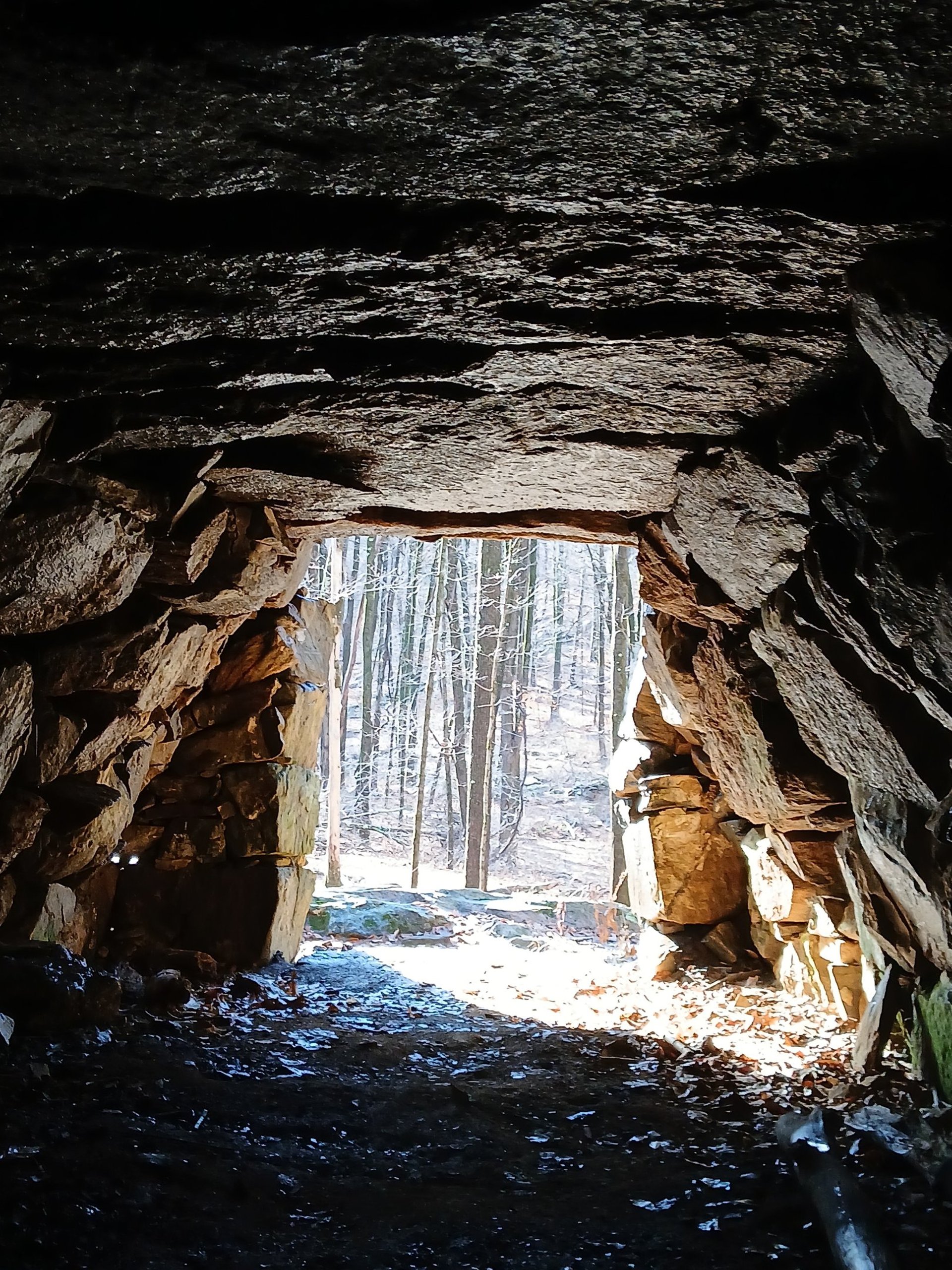
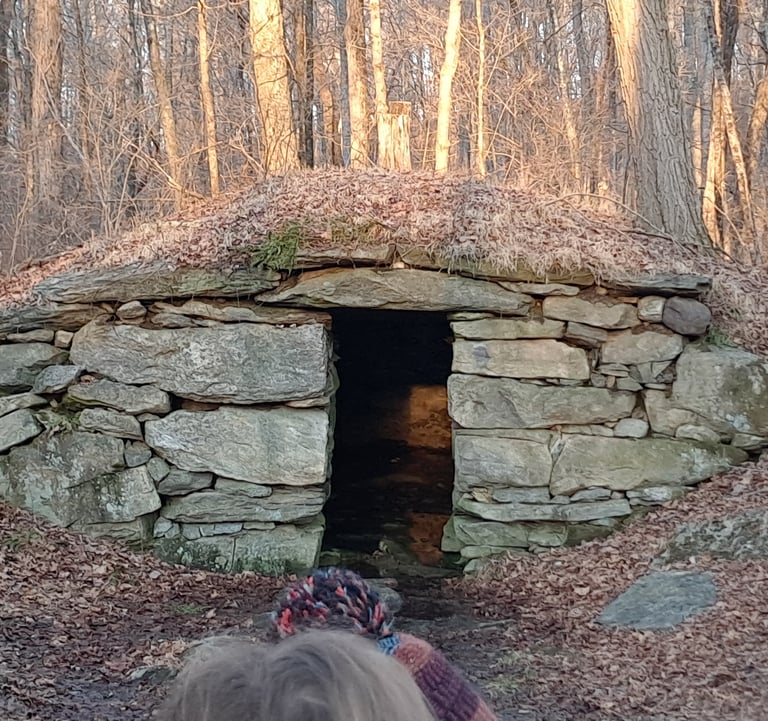
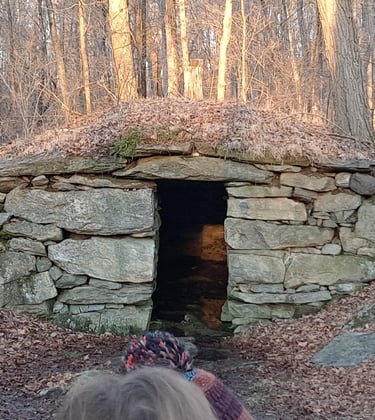
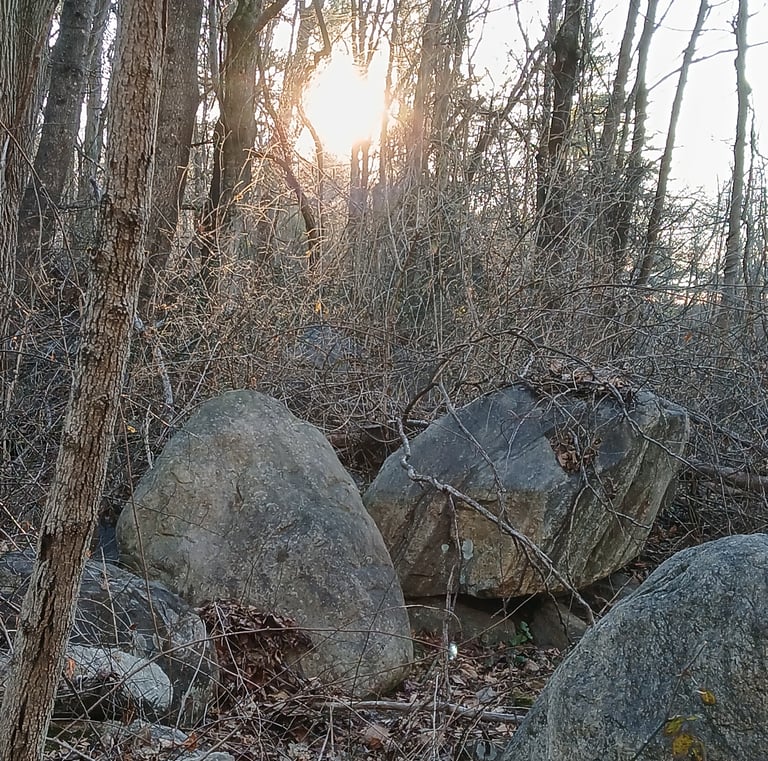
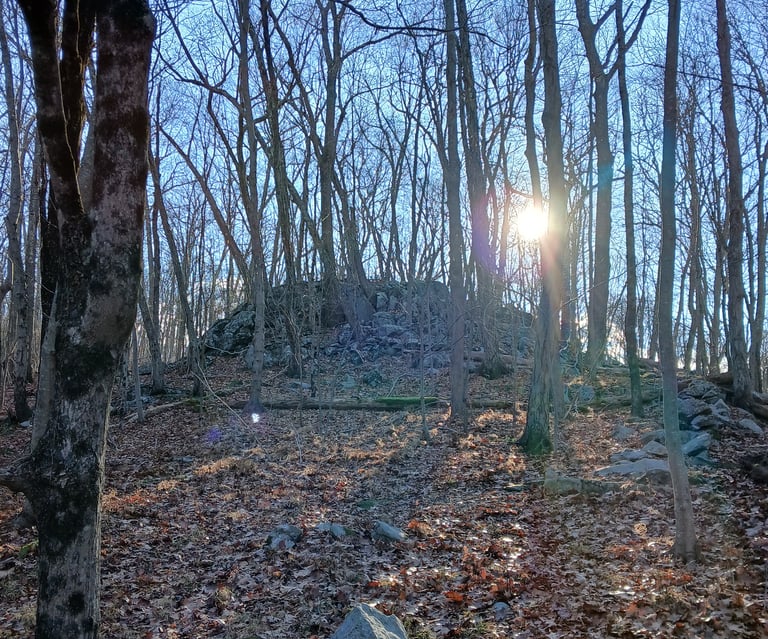
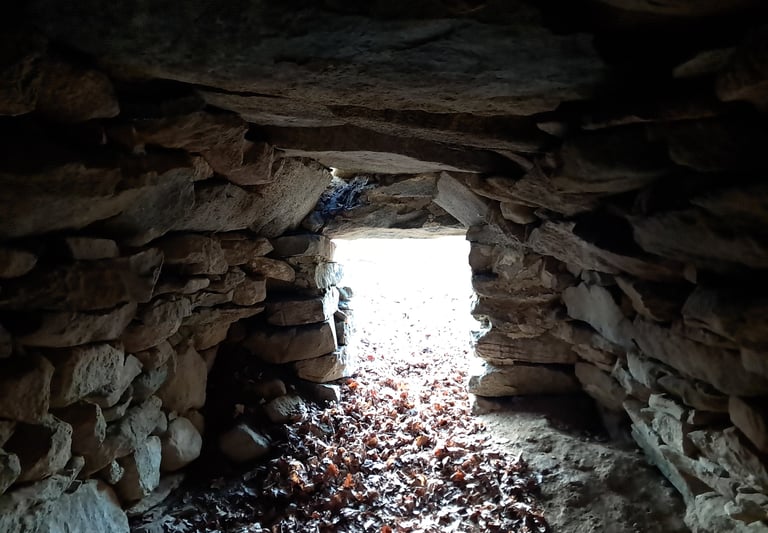
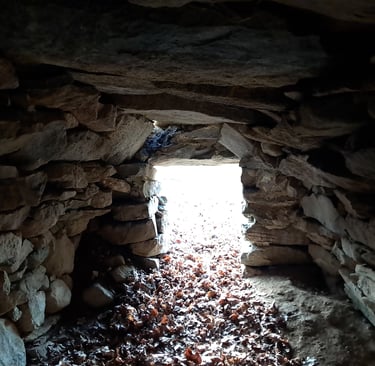
Against this global backdrop, the orientations of the New York stone chambers become deeply significant. In Putnam County, which contains the highest concentration of chambers anywhere in the Northeast, with estimates reaching upward of two hundred structures in Kent, Putnam Valley, and Mahopac alone, researchers have documented multiple chambers whose entrances face the winter solstice sunrise. The chamber in Kent is among the most studied: its entrance opens precisely toward the southeast, admitting the first light of the December solstice sun into the interior reminiscent of the light-shaft phenomenon at Newgrange.
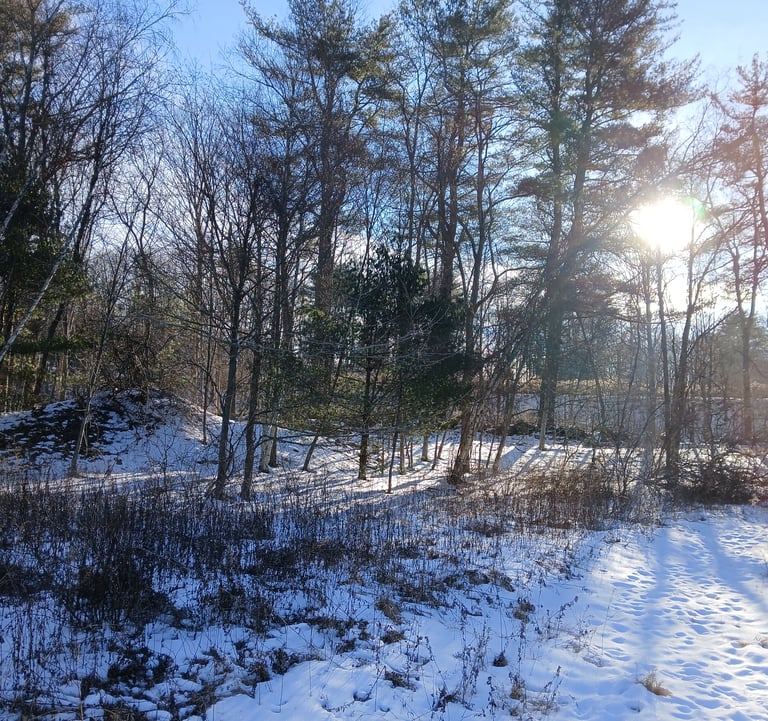
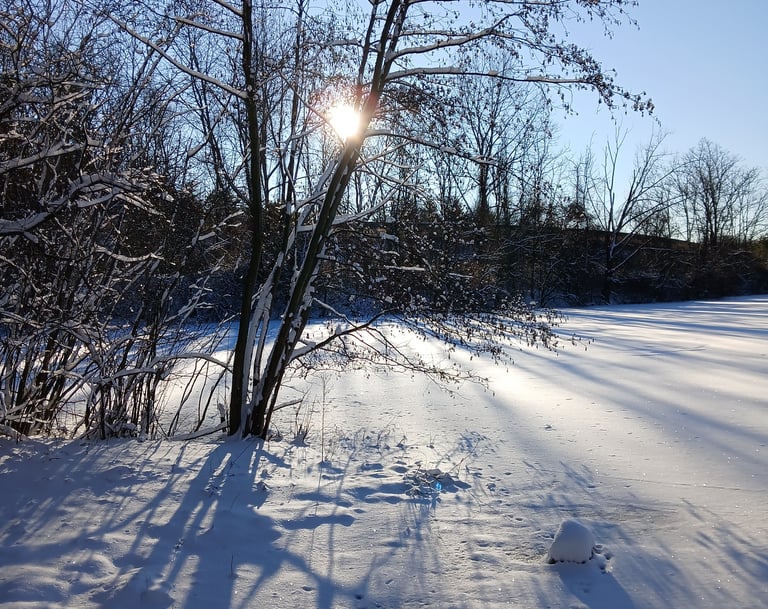
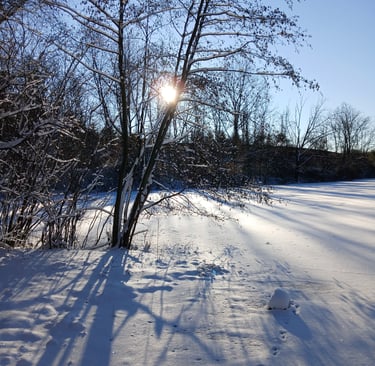
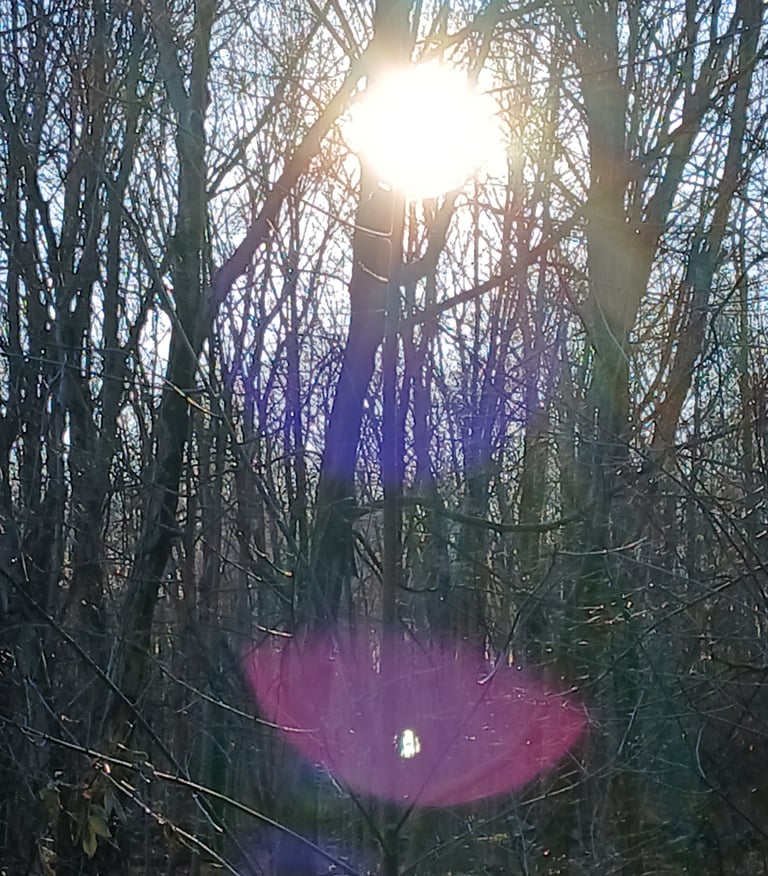
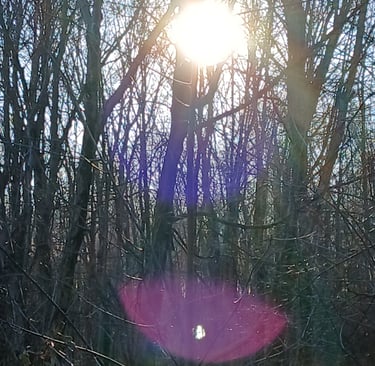
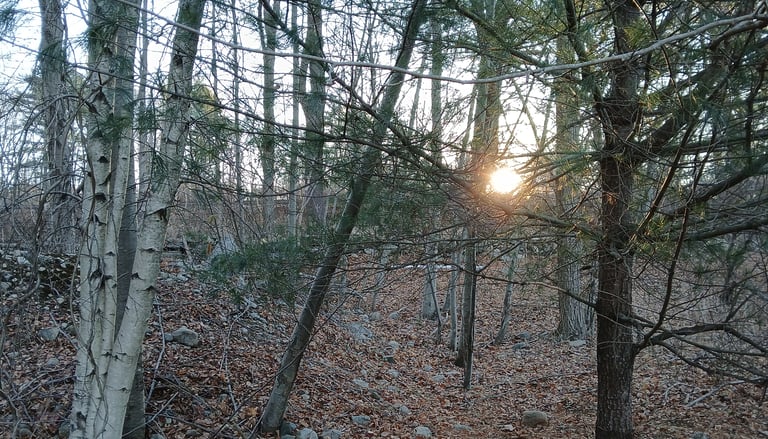
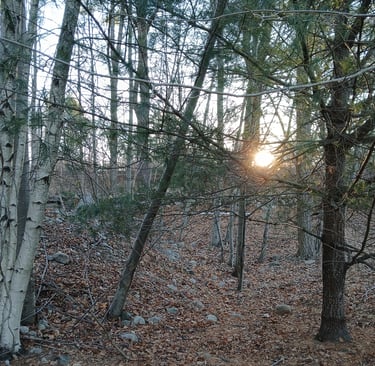
Winter Solstice December 21, 2025. Kent, NY
The New England Antiquities Research Association (NEARA), founded in 1964 to promote rigorous investigation of northeastern stone structures, has documented winter-solstice-aligned chambers across Putnam County and neighboring regions. As one documented field observation notes, these alignments show that "archaeoastronomy was practiced in North America by ancient people far back in antiquity" — a conclusion that implies the New York builders of stone chambers fit within the global tradition of solar-marking monuments that includes Stonehenge, the Pyramids of Giza, Chichen Itza's El Castillo, and the cairns of Scotland's Orkney Islands to name a few.
The alignments at the New York chambers are not uniform. Not every chamber faces a solstitial direction. However, this is consistent with patterns seen worldwide. At Loughcrew, Brennan found that different cairns tracked different astronomical events: some marked the equinoxes, others the solstices, others cross-quarter days at the midpoints of seasons. A landscape of multiple chambers could function as an integrated astronomical observatory, with each structure tracking a different moment in the solar and lunar calendar. The clustering of chambers across Putnam County and into Westchester and Connecticut may well reflect a similar distributed system of sky-watching.
Landscape archaeoastronomy which examines the relationship between monuments, topography, water courses, and celestial events adds further depth to this picture. Research along the Hudson River has revealed that points of land and the mouths of tributary streams create natural sight-lines aligned with solstice sunrise and sunset positions. At Danskammer Point, the azimuth from the Point to the mouth of Wappinger's Creek reportedly matches the summer solstice sunrise at 57 degrees from true north, and on the evening of the same day, the Pleiades rise at that identical azimuth. (See https://grahamhancock.com/kreisbergg7/). Such landscape-scale alignments suggest that the chamber builders participated in a broader cartography of sky and earth, encoding the sky's insights into the very contours of the river valley.
Archaeoacoustics: Sounds of Sacred Stone
If archaeoastronomy investigates what the builders saw, archaeoacoustics investigates what they heard and the impact of sound on humans. The field emerged as a formal discipline in the latter decades of the twentieth century, crystallized in the landmark volume Archaeoacoustics, edited by Chris Scarre and Graeme Lawson and arising from a conference held at Cambridge University's McDonald Institute in 2003.
As Scarre and Lawson's collection demonstrates through contributions from archaeologists, musicologists, and acoustic scientists, the past is not merely visual; it is multisensory. Megalithic tombs, Paleolithic painted caves, Romanesque churches, and prehistoric rock shelters present specific acoustic qualities that offer clues to how they were designed and used. Voices resonate, external noises are subdued or eliminated, and a special aural dimension emerges that complements the evidence of sight.
Among the most important acoustic discoveries of recent decades is the finding by researchers Robert Jahn and Paul Devereux that many chambered megalithic tombs share strong resonance frequencies in the range of 95 to 120 Hertz corresponding precisely to the low baritone range of the human male voice. Further studies refined this to a particular emphasis around 111 Hz, a frequency that neurological research has linked to measurable changes in brain activity consistent with meditative and trance states. Archaeological analysis reveals that structures built between approximately 5,000 and 3,600 years ago consistently demonstrate this resonant signature across multiple continents and cultural contexts.
Aaron Watson and David Keating conducted extensive acoustic experiments in burial mounds and stone circles throughout the British Isles, including Maeshowe in Orkney, Newgrange in Ireland, and Stonehenge in England. They found that chambered megalithic structures tend to produce Helmholtz resonance in the infrasonic range of 1 to 7 Hz which is below the threshold of human hearing but capable of inducing physical and psychological effects: altered breathing, elevated pulse rates, and heightened states of awareness. When Watson and Keating experimented with drumming at tempos matched to these resonant frequencies, participants reported subjective experiences consistent with ritual and ceremonial states. Their acoustic analysis of megalithic monuments in prehistoric Britain, published in the journal Antiquity, helped establish the scholarly credibility of this archaeoacoustic approach.
Iegor Reznikoff's foundational research in the prehistoric painted caves of France added another dimension to this picture. Reznikoff systematically mapped the resonance quality of cave interiors and found a striking correlation: the most elaborately decorated sections of caves densely covered with Paleolithic animal paintings, were consistently the most acoustically resonant spaces. The art was placed where the sound was most alive. This suggests that Paleolithic peoples experienced their sonic environment with profound intentionality, choosing the most resonant niches for their most sacred visual expressions. Reznikoff argued that it was inconceivable that the cave artists would not have been deeply aware of the acoustic properties of the spaces they were decorating; that the sound and the image were, for them, inseparable.
In Malta, the Hal Saflieni Hypogeum, a subterranean Neolithic complex dating to approximately 3600–2500 BCE, offers one of the most dramatic examples of deliberate acoustic architecture in the ancient world. The Oracle Room within the Hypogeum possesses extraordinary resonance: a male voice chanting in the appropriate frequency fills the entire underground complex with sound, as if the stone itself were vibrating in response. Contemporary acoustic research has confirmed that the Hypogeum was designed with an understanding of resonance physics that modern acoustic engineers continue to study with admiration.
Listening to the New York Stone Chambers
The corbelled stone chambers of Putnam County and the Hudson Valley have not yet been subjected to the systematic acoustic analysis that sites like Newgrange and the Hypogeum have received and this represents one of the most promising frontiers in the study of these structures. However, preliminary observations by visitors and researchers suggest that the chambers possess distinctive acoustic qualities consistent with their global counterparts. The corbelled roof construction, in which flat slabs project inward in successive courses until they can be bridged by a capstone, creates an interior space that functions acoustically as a bounded resonating chamber. The heavy stone walls absorb high frequencies while potentially amplifying lower ones.
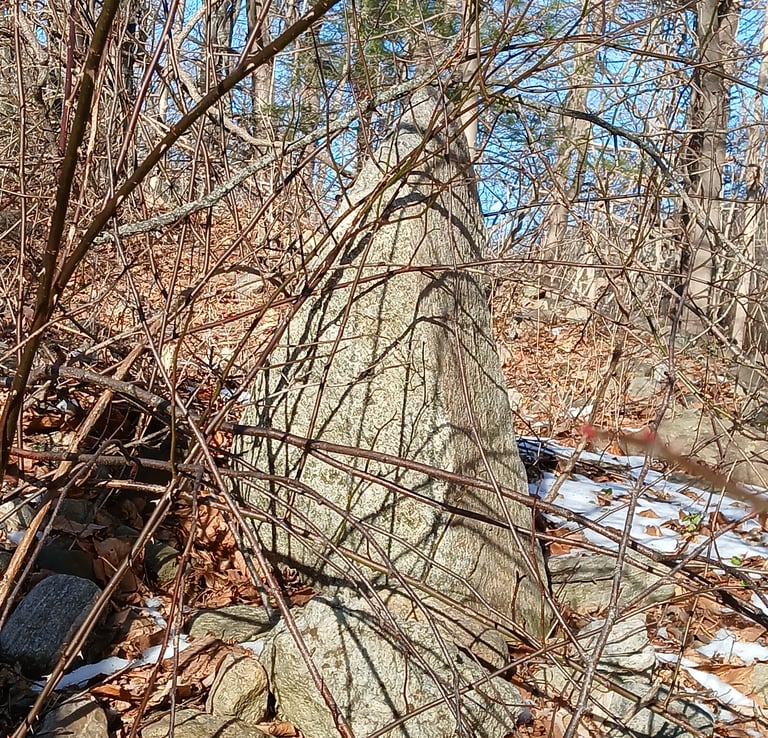
The average New York stone chamber is an intimate space: typically between twelve and thirty feet in length, six to eight feet wide, and four to six feet high at the apex. This geometry, when filled with sound at the right frequency, could produce the kind of standing waves and resonant feedback that researchers have documented in structurally similar Neolithic chambers in Europe. The use of granite and fieldstone, which are piezoelectric materials that can generate small electrical charges under pressure, adds another dimension: these materials may respond to the electromagnetic environment of the landscape in ways that are only beginning to be understood.
Several chambers in the Putnam Valley region have reportedly produced unusual electromagnetic readings during investigation. Researchers with compasses have noted that compass bearings behave anomalously near certain chambers and at the large standing stones associated with the region's stone landscape. Paul Devereux's Dragon Project, which measured electromagnetic and geophysical anomalies at sacred sites across Britain, found that many megalithic sites were positioned at geological fault lines or areas of unusual magnetic character. The Hudson Valley sits above a complex geological substrate including significant quartz and granite formations, materials with known electromagnetic and piezoelectric properties, which may have guided ancient site selection.
The acoustic investigation of the New York chambers also opens into the Lenape and broader Algonquin traditions of the region. For many Indigenous peoples, sound — drumming, chanting, the voice raised in ceremony — was understood as a means of communicating with the spirit world and maintaining harmony between the human and natural realms. Whether the New York chambers were built by pre-contact Indigenous peoples, by Algonquin-related cultures, or by the descendants of ancient Atlantic crossings remains actively debated. What is less debatable is that the stone chambers would have been known to Lenape communities, and their acoustic properties could have made them natural gathering places for ceremonial purposes if the Lenape people were inclined to make use of them.
Global Comparisons: A Universal Language of Stone
The parallels between the New York stone chambers and megalithic structures worldwide are too persistent to be coincidental. Consider the structural and astronomical similarities across cultures separated by thousands of miles and centuries of time. Newgrange in Ireland (c. 3200 BCE) uses a corbelled passage aligned with winter solstice sunrise; the Maeshowe passage tomb in Orkney, Scotland (c. 2800 BCE) aligns with winter solstice sunset; Mnajdra temple in Malta (c. 3600 BCE) tracks equinox sunrise alignments with extraordinary precision; El Castillo at Chichen Itza (c. 800–1200 CE) creates the famous serpent of light on the equinox. These are not isolated curiosities. They form a global pattern of cultures using stone architecture to record and honor the movements of the sky.
Martin Brennan's analysis of Irish megalithic art offers a template for investigating the carvings and markings very occasionally reported at New York’s stone chambers. At Loughcrew's Cairn T, the equinox sunbeam falls precisely on a carved rayed symbol, a sun wheel, that Brennan interpreted as a direct depiction of the astronomical event it marks.
Across the Boyne Valley, spirals, lozenges, and concentric arcs appear on chamber stones in positions that correspond to the movement of light beams on specific solar and lunar occasions. If similar carved markings are uncovered at New York ‘s chambers (some researchers have identified inscriptions or pecked geometric forms on certain chamber stones) systematic documentation following Brennan's methods of correlated visual and astronomical observation could prove transformative.
The Hal Saflieni Hypogeum's acoustic design also invites direct comparison with the New York chamber form. Both are subterranean or semi-subterranean stone enclosures, built without mortar, featuring corbelled or flat-slab ceilings. Both types appear embedded in the natural landscape rather than imposed upon it. Both may have served as places where the boundary between the everyday world and the world of spirit, accessed through ceremony, sound, and the astronomical marking of sacred time, was made permeable.
The Chichen Itza acoustic phenomenon documented by researcher David Lubman provides another suggestive parallel. Lubman showed that handclaps in front of the great staircase of the Kukulcan pyramid transform into a chirping sound closely resembling the call of the sacred quetzal bird — suggesting that Mesoamerican builders, like their Old World counterparts, encoded sonic phenomena into their architecture with precise intentionality. The notion that stone structures can be designed to produce specific acoustic effects whether via resonance frequencies, creating standing waves, or transforming the character of sound, is no longer a fringe hypothesis but a documented feature of multiple megalithic traditions worldwide.
Basic Field Methods to Ascertain Alignments and Acoustic Properties
A. Archaeoastronomical Field Survey
For researchers wishing to assess the astronomical alignments of New York stone chambers, a systematic methodological approach is essential. The foundational text Archaeoastronomy for Archaeologists offers a clear protocol that can be adapted for chamber fieldwork without requiring specialized astronomical training.
The primary measurement is azimuth: the horizontal angle between True North and the direction a researcher is sighting, measured in degrees from 0 (True North) clockwise to 360. An alignment is calculated by measuring the azimuth of the chamber's primary axis which is typically the center-line running from the rear of the chamber through the entrance, and the altitude of the horizon in that direction. A magnetic compass can be used to measure bearing, though the magnetic declination for the site must be accounted for. At New York's latitude (approximately 41–42 degrees north), the current magnetic declination is approximately 12–13 degrees west of True North, meaning compass readings must be corrected accordingly. GPS devices and digital compass apps can provide more precise readings.
The free open-source software Stellarium, enhanced by the ArchaeoLines plugin created by Georg Zotti, allows researchers to visualize the rising and setting positions of the sun, moon, and stars from any geographical location at any historical date. By entering the azimuth and altitude of a chamber's entrance, a researcher can instantly determine which astronomical event, if any, would have risen or set at that exact point on the horizon during the chamber's probable period of use. Free declination calculators maintained by British archaeoastronomer Clive Ruggles (available at his website) allow similar calculations without specialized software.
Best practice requires documenting: the GPS coordinates of the chamber, the True North azimuth of the primary axis corrected for magnetic declination, the altitude of the horizon in that direction (measured with a clinometer or estimated from topographic maps), photographs taken from within the chamber toward the entrance and from the entrance looking in, and horizon panorama photographs. Observations at actual sunrise or sunset on solstice and equinox dates remain the most compelling evidence for intentional alignment. Researchers should also note whether the chamber is built into a hillside facing downslope — a construction method documented in many New York chambers that would facilitate the dragging of capstones into position while also naturally orienting the entrance toward lower, open horizons where astronomical events on the horizon would be visible.
B. Archaeoacoustic Field Assessment
Assessing the acoustic properties of a stone chamber requires neither expensive equipment nor specialist training in its preliminary stages, though rigorous analysis benefits from collaboration with acoustic engineers. A basic field protocol begins with qualitative observation: stand at various positions within the chamber and vocalize at different pitches and volumes, noting where resonance is most pronounced. The human voice in the baritone range (approximately 80–150 Hz) should be used systematically, as this is the frequency range at which chambered megalithic structures most commonly resonate. Humming, chanting, or sustained toning at different pitches allows the researcher to feel as well as hear the resonant response of the stone.
A smartphone equipped with a free sound analysis app (such as Spectroid or similar spectrum analyzer applications) can produce a real-time display of the frequencies being amplified or dampened within the chamber. By generating a sustained tone across a range of frequencies — using either the voice or a tone generator app — researchers can identify the chamber's resonant frequencies: the pitches at which the interior amplifies and sustains sound most powerfully. These readings should be taken at multiple positions within the chamber (entrance, midpoint, rear) and at multiple times, as temperature and humidity affect acoustic behavior.
More rigorous assessment involves measuring the reverberation time (RT60), the time in seconds for a sound to decay by 60 decibels after the source ceases, at several frequencies. This requires a sound level meter, ideally a calibrated one, and a standardized sound source such as a starter pistol, balloon burst, or broadband speaker. The acoustic data collected can then be compared to measurements from formally studied megalithic chambers in Europe, allowing direct comparison of resonant character. Watson and Keating's published measurements from British chambered monuments, available in their 1999 Antiquity article, provide a baseline for such comparisons.
Electromagnetic measurement adds a further dimension. Simple gaussmeters or magnetometers, increasingly available as smartphone apps, can document whether a chamber site exhibits the kind of magnetic anomalies Paul Devereux documented at British megalithic sites. These readings should be taken at the chamber entrance, interior, and surrounding area, and compared to baseline readings taken at some distance from the structure. The geological substrate should be noted: the presence of quartz veins, granite outcroppings, or other piezoelectric materials in and around the chamber is particularly significant.
Toward an Integrated Research Program
The stone chambers of New York stand at a remarkable moment of potential rediscovery. After decades in which the dominant academic narrative dismissed them as colonial root cellars, a growing body of researchers working through NEARA, through independent investigation, and through inquiries that supplement conventional methods with direct intuitive engagement is beginning to document these structures with the methodological seriousness they deserve.
What Martin Brennan demonstrated so brilliantly at the Irish passage mounds was that transformative discoveries await those willing to actually be present at a site when astronomical events occur and to observe, record, and think carefully about what the builders saw and intended. The beam of light entering Newgrange at the winter solstice sunrise was not discovered by archaeologists working in libraries; it was discovered by an Irish archaeologist who climbed a hill in the dark and waited for the sun. The same spirit of direct, patient, site-based observation is what the New York chambers need: researchers willing to be present at the chambers at dawn on December 21st, at the vernal equinox sunrise, at the cross-quarter days, to document in real time whatever light phenomena may animate these stone interiors.
Similarly, the systematic acoustic documentation of the chambers beginning with simple voice-based resonance exploration and progressing to calibrated measurement could yield findings of genuine significance. As the contributors to Scarre and Lawson's volume make clear, ancient peoples across the world engaged with sound as a sacred technology, designing spaces that altered consciousness, amplified ceremony, and encoded the relationship between the human voice and the cosmos. The New York chambers may yet prove to be part of that tradition.
The Hudson Valley has always been a liminal landscape. It is a place where the mountains meet the river, where glacial erratics punctuate the forest floor, where the bedrock pulses with crystalline energy, and where Native Americans have always understood the land as alive with spirit. The stone chambers belong to that landscape, built by hands whose cultural identity remains debated but whose cosmological sensitivity appears, increasingly, to be beyond question. Sky, sound, and stones: in these three domains, the chambers of New York await researchers willing to listen.
Finally, perhaps the most important principle underlying the study of New York’s stone chambers and of corbelled megalithic structures anywhere in the world is that no single way of knowing is sufficient on its own. The conventional archaeologist brings rigorous scientific methodology and the discipline of evidence; the archaeoastronomer brings mathematical precision and celestial knowledge; the acoustic scientist brings instrumentation and measurement; and yet none of these frameworks alone can fully illuminate the lived meaning of a stone chamber built by human hands in a sacred landscape thousands of years ago.
It is therefore imperative that researchers of all orientations approach these sites with genuine openness to perspectives beyond their own training. That means, above all, listening with respect and humility to the Indigenous peoples whose ancestors walked and knew this land long before any academic framework existed to describe it. The Lenape and other Algonquin-speaking nations hold oral traditions, ecological knowledge, and ceremonial relationships with this landscape that constitute an irreplaceable form of intelligence about these sites. Their voices deserve not just inclusion but primacy of respect in any research conversation. Equally, the intuitive dimensions of inquiry, and the capacity to receive impressions, visions, and direct knowing from a site through disciplined inner attention, represent a legitimate and ancient methodology, one practiced by the very culture(s) that built these structures.
A truly comprehensive understanding of New York’s stone chambers will emerge only when archaeologists, sound researchers, astronomers, geologists, Indigenous knowledge-keepers, and intuitive researchers sit together at the threshold of these remarkable places and listen to each other, and to the stones themselves. The New York stone chambers have waited a long time for this conversation.
Selected References and Further Reading
Brennan, Martin. The Boyne Valley Vision. Dublin: Dolmen Press, 1980.
Brennan, Martin. The Stones of Time: Calendars, Sundials and Stone Chambers of Ancient Ireland. Rochester, VT: Inner Traditions, 1994. (Originally published as The Stars and the Stones, Thames and Hudson, 1983.)
British Government: Archaeoastronomy for Archaeologists: A Basic Guide. https://www.bajr.org/wp-content/uploads/2024/08/Archaeoastronomy-for-Archaeologists-2024.pdf
Devereux, Paul, and Robert Jahn. "Preliminary Investigations and Cognitive Considerations of the Acoustical Resonances of Selected Archaeological Sites." Antiquity 70 (1996): 665–666.
Kreisberg, Glenn. “Ancient Astronomy Along the Hudson River in New York.” https://grahamhancock.com/kreisbergg7/
Lubman, David. "Archaeoacoustical Study of El Castillo, a Mesoamerican Stepped Pyramid at Chichen Itza, Mexico." Journal of the Acoustical Society of America 106 (1999): 2167.
Reznikoff, Iegor. "The Evidence of the Use of Sound Resonance from Palaeolithic to Medieval Times." In Scarre and Lawson, eds., Archaeoacoustics (2006), pp. 77–84.
Ruggles, Clive. Astronomy in Prehistoric Britain and Ireland. New Haven: Yale University Press, 1999.
Ruggles, Clive, ed. Handbook of Archaeoastronomy and Ethnoastronomy. New York: Springer, 2015.
Scarre, Chris, and Graeme Lawson, eds. Archaeoacoustics. Cambridge: McDonald Institute for Archaeological Research, 2006.
Watson, Aaron, and David Keating. "Architecture and Sound: An Acoustic Analysis of Megalithic Monuments in Prehistoric Britain." Antiquity 73 (1999): 325–336.
Watson, Aaron. "(Un)intentional Sound: Acoustics and Neolithic Monuments." In Scarre and Lawson, eds., Archaeoacoustics (2006).
Zotti, Georg. ArchaeoLines Plugin for Stellarium. Open source archaeoastronomical visualization tool. Available via stellarium.org.
© Meg Hansen / metaphysicalnewyork.com
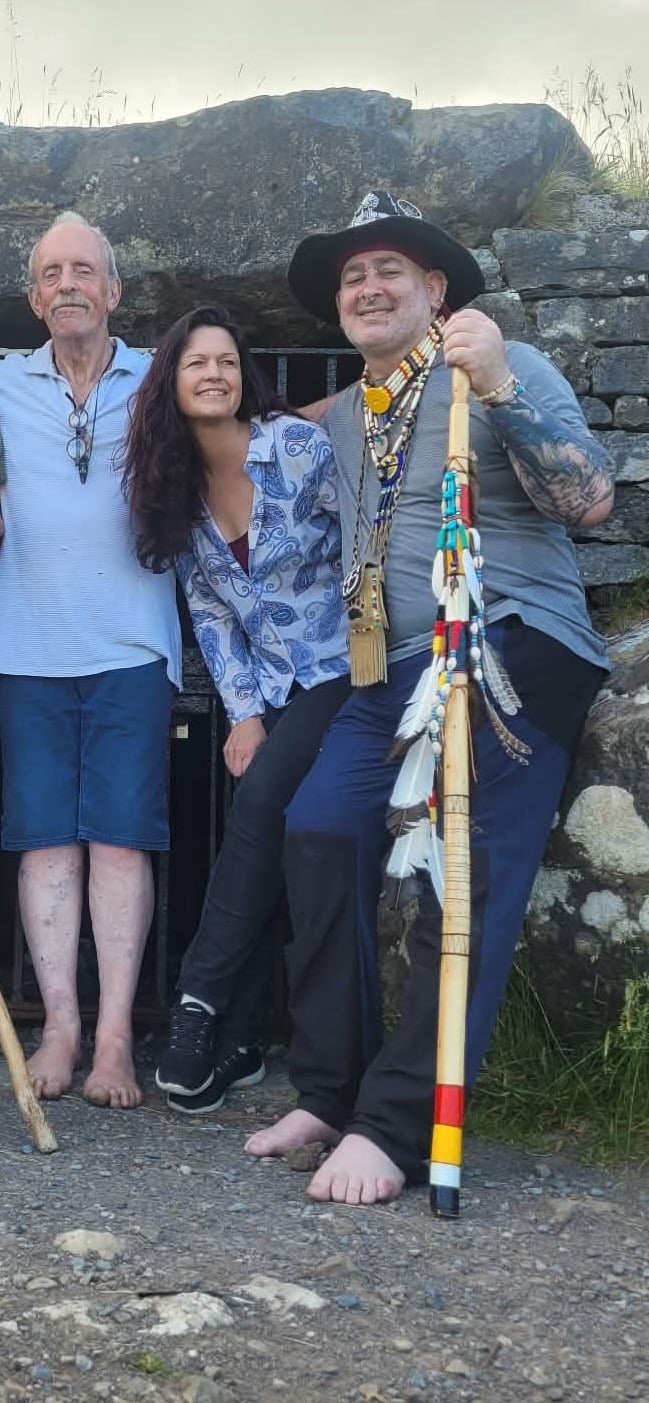

Lar Dooley, Meg Hansen & Keomea Twosticks @ Loughcrew, County Meath Ireland in 2022
FOLLOW US ON FACEBOOK.COM/METAPHYSICALNEWYORK
SUBSCRIBE
Subscribe to our newsletter to always be the first to receive news, new events, and discounts.